.png)
Youth Funded
Runaway and Homeless Youth (RHY) and Youth Homelessness Demonstration Program (YHDP) programs provide specialized services and housing interventions designed to support youth and young adults experiencing homelessness, housing instability, or unsafe living situations. Within HMIS, RHY and YHDP programs use the system to document participant enrollment, assessments, services provided, housing placements, case management activities, referrals, and program outcomes in accordance with federal, state, local, and Continuum of Care (CoC) reporting requirements.
RHY programs focus on serving youth who are runaway, homeless, or at risk of homelessness by providing crisis intervention, emergency shelter, transitional living services, street outreach, family reunification support, and connections to education, employment, healthcare, and other community resources.
YHDP programs are designed to develop and implement innovative, youth-centered approaches to preventing and ending youth homelessness through coordinated housing and supportive service interventions. Both program types emphasize positive youth development, housing stability, self-sufficiency, and long-term well-being.
HMIS serves as the primary system for tracking participant enrollment, service delivery, housing outcomes, case management activities, referrals, and progress toward individualized goals. Accurate and timely data entry ensures communities can measure program effectiveness, evaluate participant outcomes, and meet reporting requirements associated with RHY and YHDP funding.
RHY Basic Center Program Emergency Shelter
A single client may receive either prevention or emergency shelter or both prevention and emergency shelter during one experience at BCP. Below is guidance on how to approach the distinction:
- If a youth receives services that are not shelter stays, the youth would be entered into the BCP prevention project using the Prevention Workflow along with the RHY specific guidance below.
- If the youth stays in the emergency shelter, the youth would be entered into the shelter project using the Entry/Exit shelter workflow along with the RHY specific guidance below.
- If a youth initially comes in contact with the program to only receive preventative services, but afterwards enters a shelter program, the youth should be entered into BCP Prevention during the date range in which they are only receiving prevention services, and then be exited out of prevention and entered into BCP-Emergency Shelter.
- If the youth leaves the shelter but still receives preventative services, the youth should be exited out of emergency shelter and the preventive services should be recorded as After Care.
- For clients that move on the same day from the prevention program to the shelter (i.e., require overnight sheltering) recording them only in the shelter project is acceptable.
RHY Street Outreach
The Project start date is the date of first contact with the client. SOP projects should record a separate contact in addition to the Project Start Date.
Street Outreach Program grantees are expected to capture as much information as is possible at the initial interaction with the client. However, given the nature of street outreach, RHY SOP, like all other street outreach projects in HMIS may gather and enter/edit much of the information over multiple interactions or contacts. Grantees should enter and edit the data as they become aware of it. Initial name records may, for example, be “Youth in Patriots cap.” Upon further interactions, the case manager might be able to fully engage the youth to create a full named record in HMIS
Understanding Households for RHY/YHDP
All HMIS systems place individual clients in households. A household may be a single person household (i.e., an unaccompanied youth) or a household with multiple persons (i.e., household of a parenting youth and child or children). Where two or more youth under age 18 present at a project together without children, each youth should be entered in their own household. In this way, all elements required to be collected for youth by RHY grantees should be visible for data collection in HMIS as each youth is their own Head of Household.
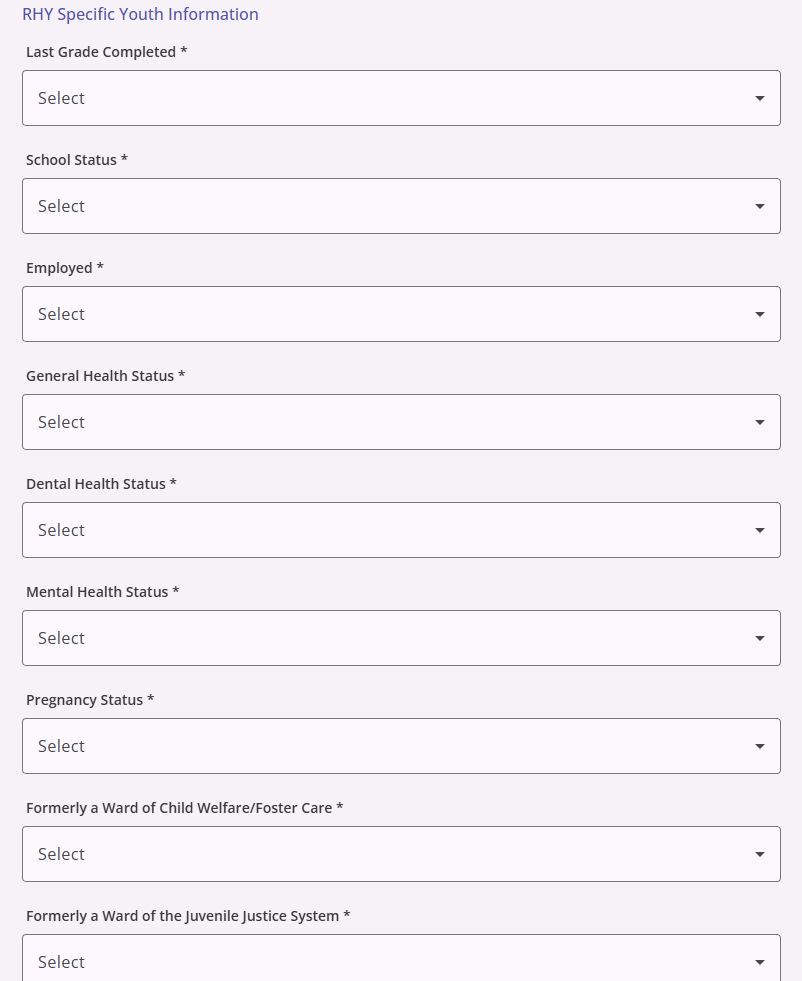
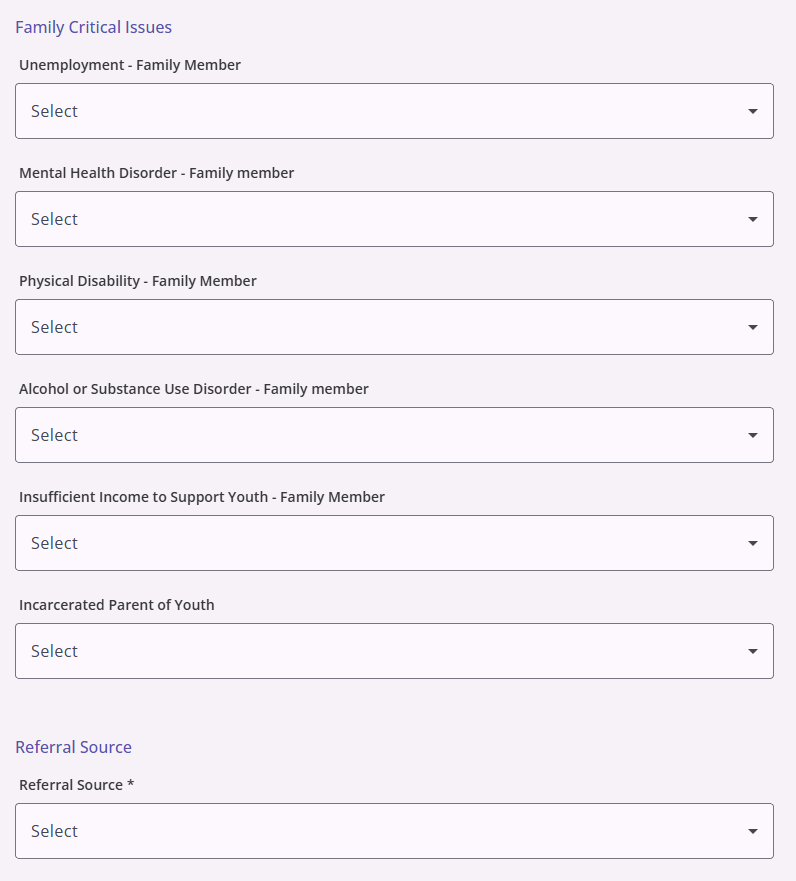
RHY/YHDP Specific Data Elements
RHY/YHDP programs have additional programs specific data elements that are required for reporting purposes. Ensure that all applicable SSVF data elements are completed.
Resources
- New England RHY/YHDP HMIS Workflow Manual
Forms
Looking for RHY/YHDP forms for your state? Click the link: New England Forms
Copyright 2026 Institute for Community Alliances. All rights reserved.